Dit artikel verscheen in FORUM+, pp. 42-49
From the mountain I see the mountain
Julián García Long
This article examines how artistic research can transform one’s “Sense of Place”. Reflecting on the process of making a film in a burnt native forest in northern Patagonia, I explore how a transdisciplinary approach combining indigenous counter-stories, archival research, and filmmaking practices revealed a layered landscape of hidden temporalities and presences in a territory marked by colonial erasure. By challenging dominant visual paradigms, the project fostered an ongoing process of decolonizing my own gaze.
Deze bijdrage onderzoekt hoe artistiek onderzoek iemands Sense of Place kan veranderen. Ik vertrek vanuit reflecties op een filmproject in een verbrand inheems bos in Noord-Patagonië. Aan de hand van dit project onderzoek ik hoe een transdisciplinaire aanpak, die inheemse tegenverhalen, archiefonderzoek en filmpraktijken combineert, een gelaagd landschap zichtbaar maakte. Daarbij kwamen verborgen tijdsdimensies en aanwezigheden aan het licht in een gebied dat gekenmerkt wordt door koloniale uitwissing. Door dominante visuele paradigma’s ter discussie te stellen, stimuleerde het project een voortdurend proces van dekolonisatie van mijn eigen blik.
I inherited from my ancestors the urge to flee.
They say my blood is European.
I feel that each blood cell comes from a different place.
From every nation, every province, every island, gulf, accident, archipelago, oasis.
From every piece of land or sea they have usurped something and thus formed me,
condemning me to the eternal search for a place of origin.
– Alejandra Pizarnik, Diaries.1
A year after finishing a project in Patagonia, I returned from Belgium to Neuquén to visit my family, about 350 km from where I had been working. One afternoon, we went rowing on the Limay River, where the city meets La Barda, a dry, reddish land. The wind was blowing against us and the sun was blazing, just like it usually does. As the river turned, a cliff appeared. It was about 30 metres high. The clean cut revealed the geological strata: red, grey, and then a dark, almost black strip. We stopped there. There was a single tree that offered some shade. From some cubic rocks, fractured by the sun and water with surgical precision, we jumped into the water. I held on to a rock so the current would not carry me away. I saw a white heron standing on another rock. It was still, perhaps looking for fish. Then it took flight. It reminded me of a text from the 1930s recounting the last ceremony of a Mapuche community.2 At the end, an eagle flew low, from left to right. Bad omen. Days later, the people were being evicted from their land. I looked around. I thought there must be stories like this here too, in this landscape that I grew up believing was an empty desert. It was the first time I felt fascinated by my homeland.
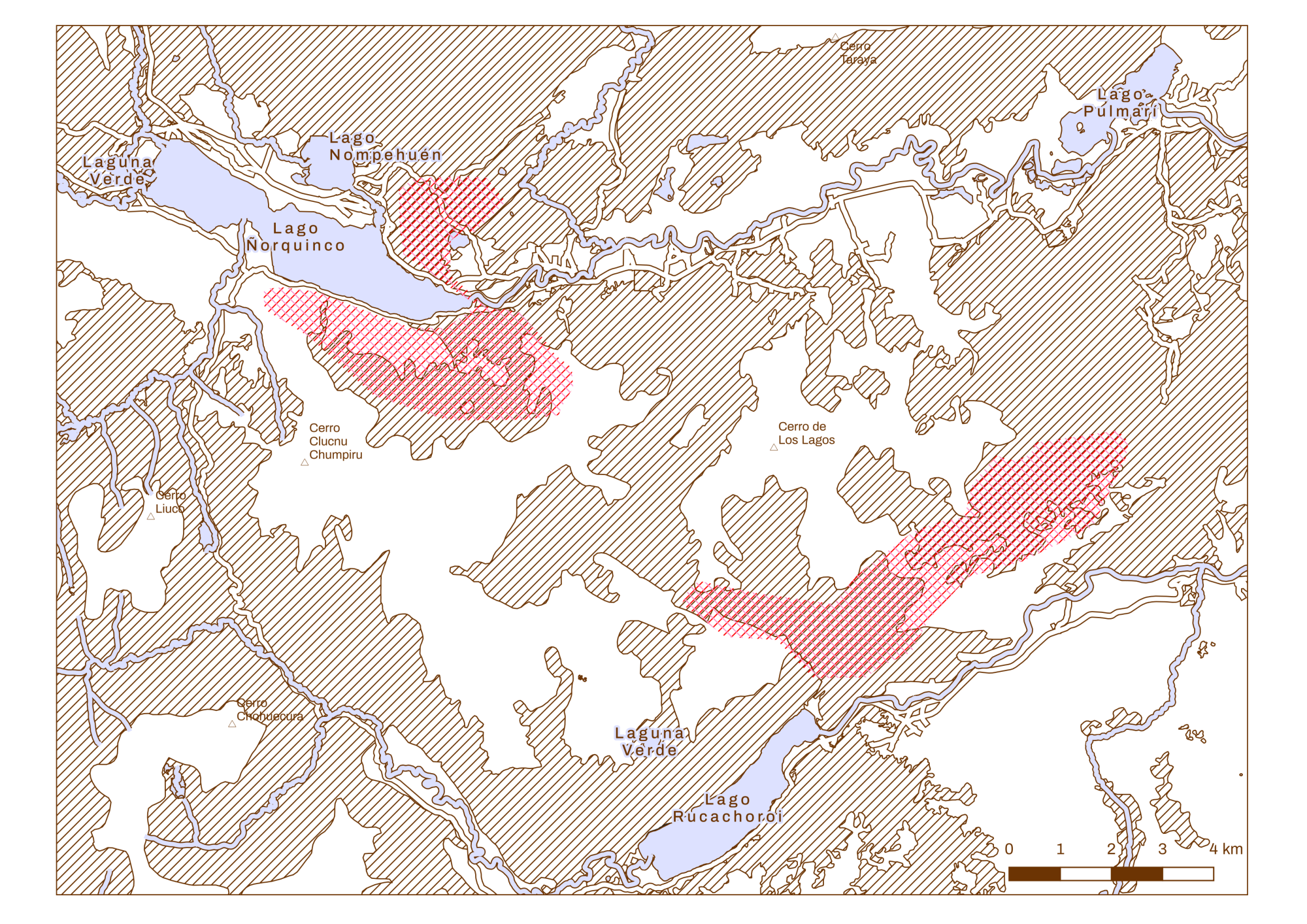
Fig. 1: Julie Vanderhaeghen and Julián García Long, map of the research field: burnt forest areas are depicted in red. Basemap data: OpenStreetMap contributors. Map by Julie Vanderhaeghen and Julián García Long.
This contribution revolves around an ongoing transformation in my way of perceiving Patagonia, which I argue was caused by a two-year artistic research project on a burnt native forest, which included making the medium-length film Desde la montaña vemos la montaña (From the mountain we see the mountain, 2025). Drawing from local encounters, archival research, and audiovisual practices, this research seeks to challenge prevailing ways of perceiving and relating to the landscape of Argentine Patagonia. As geographer Neil Smith pointed out, the way society is organized and its relationship to nature is shaped by how we understand and represent the natural world.3 However, changing how we decode and relate to nature is not an easy task, as it is inherently intertwined with one’s identity and the cultural influences that shape it. As a filmmaker, I asked myself: could cinema foster a relational depiction of the land, placing human histories into its broader natural context, and in doing so, alter our perception and engagement?
This research had an unexpected effect. What I initially intended to do for the viewers, deconstructing the narrative of an empty and virgin Patagonia, began to dismantle first within me, affecting how I saw and related to that landscape. Although I believed I did not participate in these narratives due to my intellectual awareness of them, the modulation in my perception revealed the extent to which colonial representations had shaped my relationship with the region. Slowly, I came to understand that the transformation I was undergoing was a result of my artistic research practice. As James J. Gibson points out in his studies on perception, vision is relational: certain practices can alter it by revealing new affordances in the landscape.4 Just as practices can reorient perception, stories can obscure or bring to light layers of history embedded in the landscape. Local counter-stories that challenge the notion of Patagonia as an empty wilderness – stories that have survived despite the dominant Eurocentric discourse that characterizes Argentina’s identity – can reshape our gaze.
Throughout this research, the interplay between practice and narrative transformed my relationship with Patagonia. Previously hidden histories and presences began to emerge in the landscape, affecting my “Sense of Place”. I am referring to what anthropologist Keith Basso defines as “a way of appropriating portions of the earth”, an active, cultural activity that involves the particulars of local topographies, personal biographies and systems of thought.5 What are the affordances that artistic research can reveal in the landscape to change our Sense of Place, as it did for me?
The forest is the set
Between 2023 and 2024, I made two trips from Brussels, where I am now based, to Northern Patagonia to do my research. I worked for a total of six months in two burnt areas of native Pewen forest, near Lake Ñorquinco and Lake Rucachoroi. The Pewen (Araucaria Araucana), a tree central to Mapuche culture, dominates these forests. Both areas were affected by wildfires that began in December 2013, burning approximately 4,500 hectares of native woodland.
I had rarely been to that area, a landscape off the tourist trail, marked by an indigenous presence. Though I grew up only a few hours away in Neuquén, the biggest city in Patagonia, my childhood trips to the mountains were largely limited to the region’s better-known tourist landscapes.
What I initially intended to do for the viewers, deconstructing the narrative of an empty and virgin Patagonia, began to dismantle first within me, affecting how I saw and related to that landscape.
My genealogy fits the narrative that Argentina is a country of European migrants, a nation whose identity has been Eurocentric since its foundation, as historian Alejandra Mailhe explains.6 I come from poor Southern European immigrants who arrived in Argentina in the first half of the twentieth century. My cultural influences came mainly from the global North or from Argentina’s metropolitan centres. Therefore, there was a distance between the territory where I grew up and the identity that nourished me. With almost no connection to local history and its myths, my experience of the Patagonian landscape remained shallow, reduced to the purely visual: beautiful mountains without history, mythology, or botanical knowledge.
While I was in Brussels during the pandemic, I made the short film La desesperación de los monos (The despair of monkeys, 2023), almost entirely through archival manipulation. It explores landscape regimes and colonialism through the circulation of plants between Patagonia and Europe, focusing especially on the Pewen. Even from 13,000 kilometres away, working with those archival images deepened my interest in the territories I had repeatedly seen through them, compelling me to base my next project there, this time through direct filming.
I was looking to create images that would distance themselves from the European pictorial landscape tradition and the ways of relating to nature that it had helped to establish. Born in the late fourteenth century, the European pictorial landscape, as film scholar Teresa Castro argues, is an exemplary offspring of naturalist ontology, as the viewer and the land are set apart, and nature becomes an external object. It is “the ability of a subject to abstract himself from the universe around him and recognize it as a sensitive object separate from him and worthy of appreciation, particularly through the eye”.7 Once celebrated for its aesthetic and symbolic value, it has come under critical scrutiny in the current revision of the human/nature relationship. Art historian W. J. T. Mitchell has examined the role of landscape as a vehicle of colonial projects; far from being neutral or innocent in its representation of nature, it is an agent with cultural power.8 Environmental historian William Cronon has shown how the concept of wilderness (one of the central tropes of the landscape genre) has been used to exclude humans, especially marginalized and indigenous communities, from nature, obscuring historical models of human-nature cohabitation that offer alternatives to the modern dichotomy between exploitation and preservation.9
Northern Patagonia, my birthplace, reflects this paradigm. One of the most persistent imaginaries of Patagonia, with endless lakes and mountains, was the result of successive visual and discursive transformations. As historian Inés Yujnovsky has shown, Patagonia was represented first as a hostile desert on the margins of civilization, then as an empty territory made available by conquest, and later as an abundant and seemingly pristine landscape.10 Chronicles, paintings, photographs, postcards, and films all contributed to the construction and circulation of these shifting imaginaries.
When Argentine undertook the military campaign La Conquista del Desierto (1875–1885) to expand from its former border in La Pampa to the southern tip of the American continent, two official photographic albums were produced: the first one in 1879 by Antonio Pozzo, and the second one, the “Álbum de Encina, Moreno y Cía.” in 1883, with photographs by Pedro Morelli. These panoramic shots played a symbolic role in the erasure of the indigenous peoples who inhabited Patagonia before the campaign and who, despite the military violence, have continued to inhabit the region up to the present day. As historian and media researcher Marta Penhos argues, these vistas of vast and empty landscapes almost completely suppressed the indigenous presence and presented the region as a land available to settlers who would later arrive, encouraged by the state.11 Moreover, Yujnovsky shows that when indigenous peoples did appear in these late nineteenth-century albums, they were no longer depicted as powerful subjects, as before the occupation, but as objects of study; reduced savages from a vanishing past.12
This image (Fig. 2), included in the “Álbum de Encina, Moreno y Cía.”, was taken in the same area where my project took place:
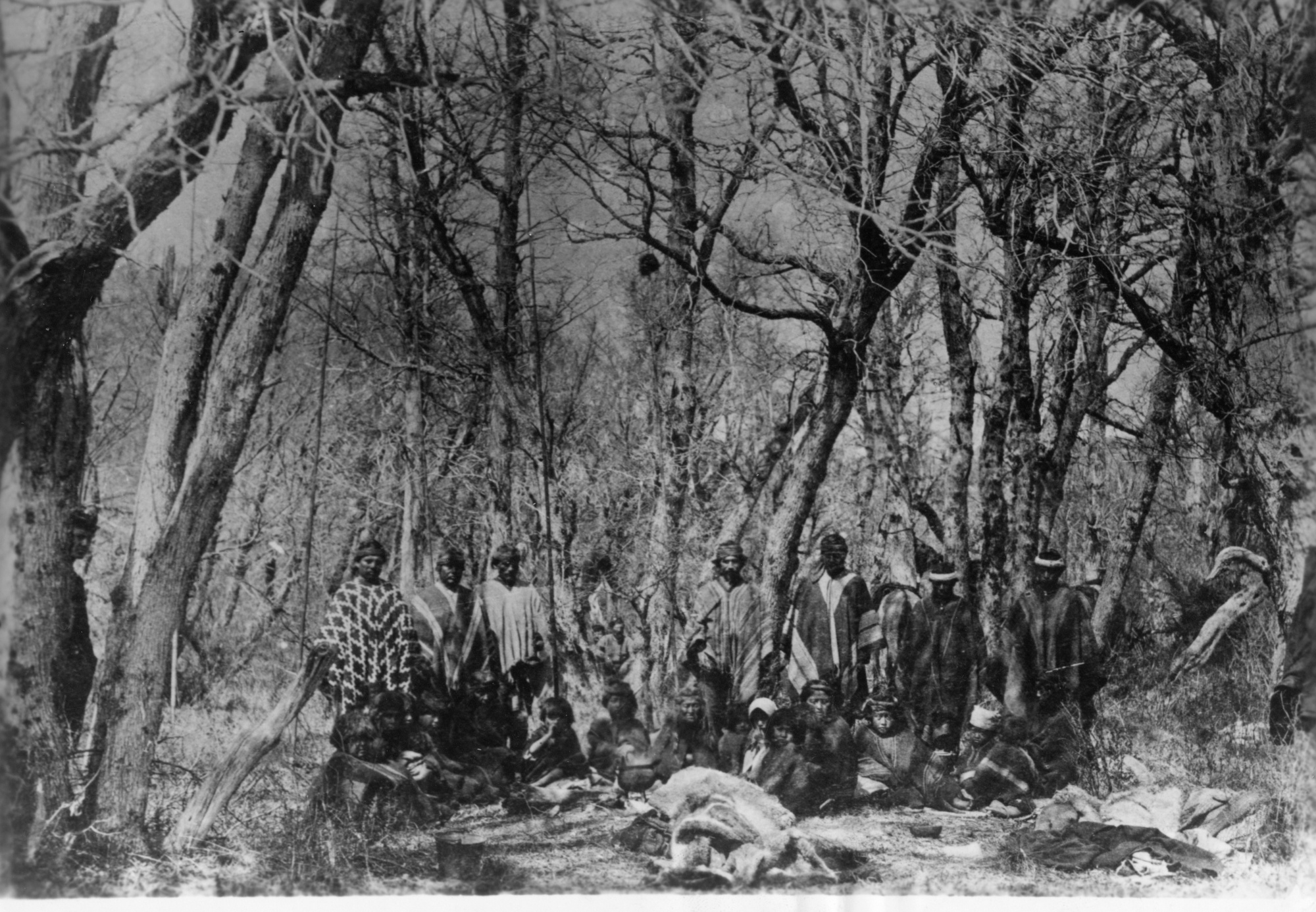
Fig. 2: Museo Roca, Bosque de Ñires al pie del cerro Ruca Choroy, photo 61, volume II of the “Álbum Encina, Moreno y Cía.”, 1883. Photograph by Pedro Morelli.
The caption in the album prioritizes the territory over the captured Mapuche people, deliberately positioned as part of nature: “Ñire forest at the foot of the ‘Ruca-Choroy’ [parrot’s house] hill on the east bank of the Moquehue lake, source of the Aluminé river. Indian prisoners. Barometric altitude 1300mts”.
Later, during the first half of the twentieth century, postcards further shaped Patagonia’s identity. The earlier image of the empty conquered territory gave way to a rich landscape of lakes, forests, mountains, and fertile plains, inviting tourists and settlers. Despite the diversity of the places photographed, these images shared a remarkably uniform aesthetic. They offered a pleasant, idyllic representation of nature, where, as Carlos Masotta observes:
The economic speculation and the politics of the conquest have become a thing of the past. The territory constructed as landscape has been transformed into a friendly object, in a source for – and an expression of – pleasure.13
It was partially through these cultural artefacts that the imaginary of Patagonia as an available and pristine territory was established. This image would later be institutionally reinforced through the creation of National Parks in the 1930s, including the Lanín National Park, where my artistic research took place.
Against these dominant representations, a growing body of scholars has proposed alternative ways of conceiving landscape, calling for an urgent reorientation in the face of the climate crisis. Studies by Agustin Berque,14 Jean-Marc Besse,15 and Val Plumwood,16 among others, explore a relational understanding of landscape as a necessary alternative to the objectifying Western gaze. Within these references, the work of art historian Estelle Zhong Mengual was particularly influential for me. Through her analysis of Western landscape painting, she identifies possibilities for re-educating our ways of seeing nature within that tradition. Her contribution is notable because it does not ask those of us shaped by Western naturalism to adopt the unrealistic ambition of “becoming” animist, but instead suggests that other modes of attention can emerge from within the traditions that have shaped us.17 Keith Basso’s anthropological studies of the Western Apache people, exploring the Sense of Place as an intricate relationship between landscape and storytelling,18 together with Chérie N. Rivers’s work on deconstructing colonialism through a critical engagement with archives,19 also constitute key references. These contributions are complemented by the historical and anthropological work of José Bengoa Cabello, who, among others, has dismantled the creole imaginary that precolonial Mapuches dwelt in untouched forests; such arguments overlook the historical presence of indigenous communities and the dynamic ways these landscapes were shaped long before European arrivals.20 Just as the Mapuche did not disappear under the expansion of modern states, European colonization was not the cause of the destruction of virgin forests. These perspectives from different fields have informed and inspired this research throughout its process.
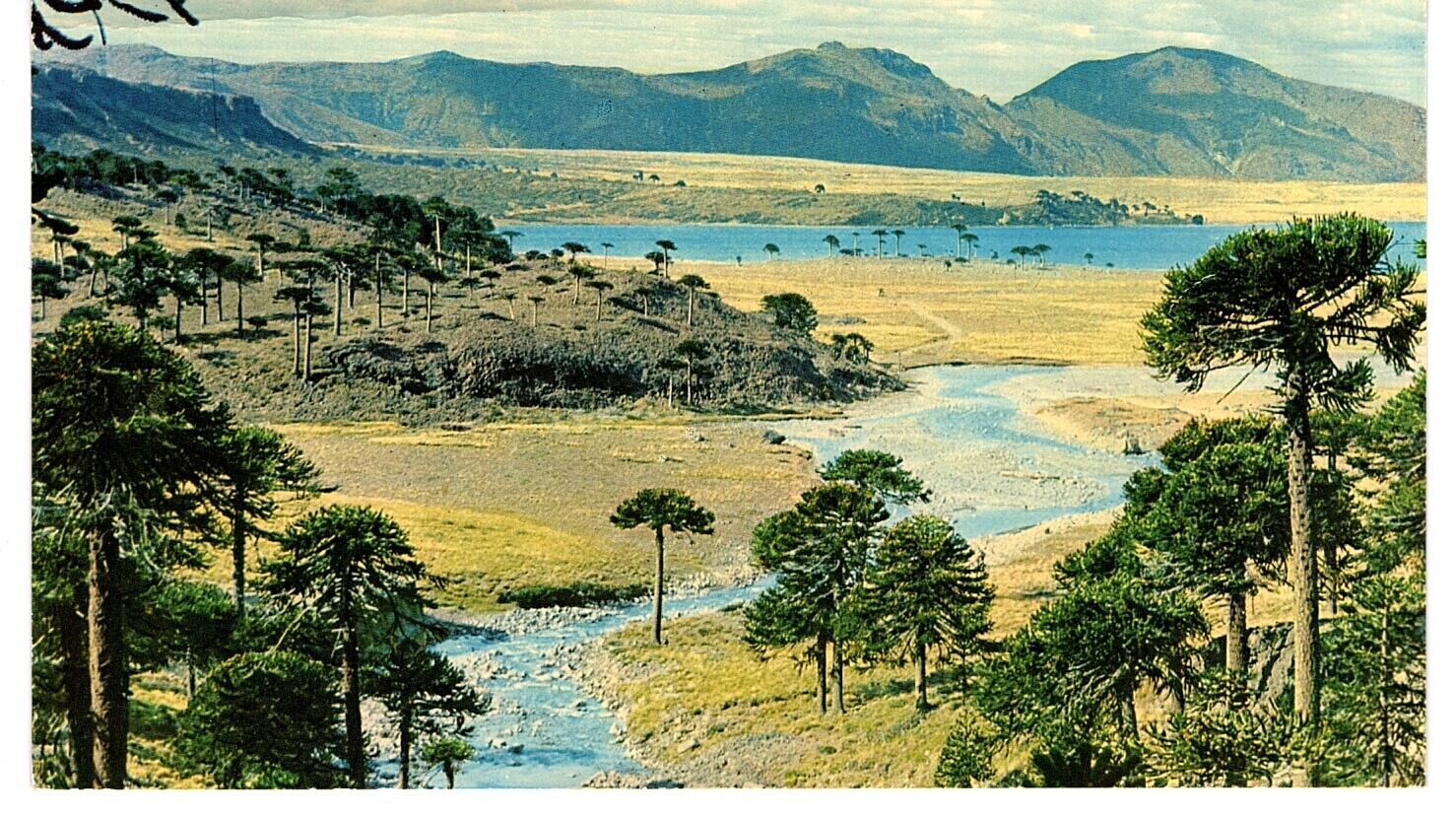
Fig. 3: Sistema Provincial de Archivos Neuquén, Vista del Valle de Caviahue, circa 1940, digital scan.
I sought cinematic strategies to mingle ecological and colonial histories with ephemeral acts of habitation, revealing a relational and unofficial history of the land beyond the virginal myth of Patagonia. In this sense, my artistic research was situated within the “Territorial Turn” in the arts, or “Arterritorio”, according to Marcos Perearnau’s definition: artistic practices driven by the urgent ecological crisis that seek to reshape our relationship with the territory as a sustainable support for both the artwork and life itself. These are practices that “articulat[e] creation, research, and activism”21 in/with specific places and their historical, geological, biological, textual, and filmic layers, among others. From this perspective, my project was grounded in the territory and the lived encounters with those who inhabit, study, and care for it.
The conversation exposed that within him and the community there was an oblivion – a symptom of colonization, its very trace. But the Rewe still stands; a reminder of that loss that prevents us from forgetting.
During the first trip, we were a small film crew of three people, sometimes only two. Over several days, we wandered through the burnt forest in the mountains, meeting those who engage with the forest daily. We initially approached park scientists, learning about the reforestation process and the tense balance between conservation policies and the needs of indigenous communities. These policies often require the reduction of livestock in the forest, while many indigenous families depend on those animals for subsistence. Yet they are also aware that livestock cannot survive without a healthy forest. We followed the reforestation in the Lanín National Park, on the edge of Lake Ñorquinco, involving Mapuche communities, scientists, and winca volunteers (the non-indigenous, white “other”). As a winca myself, I was interested in working with people from diverse cultural backgrounds and with different relationships to the territory, brought together by a shared commitment to restoring a native forest. These encounters led us to meet a few young Mapuche people navigating the tensions between Western culture and indigenous cosmologies. I was interested in exploring how their relationship to the land, distinct from my urban experience and from settlers’ and travellers’ perspectives that have historically shaped Patagonia’s image, could contribute to alternative images of the Patagonian landscape. This curiosity was not without contradiction: it carried a primitivist impulse, akin to how Alejandra Mailhe characterizes certain nineteenth- and early twentieth-century Argentinean intellectuals. Like them, I was searching for the indigenous person bonded with the land who offers “some form of transcendence capable of compensating for the ‘disenchantment of the world’ inherent in modern experience and the advance of Westernization.”22
These lands had been taken from indigenous communities in the 1940s and partially recovered in the late 1990s. There was the Rewe field (or Rehue), a Mapuche ceremonial plateau, featuring a vertically erected wooden trunk at its centre, with an anthropomorphic face carved into it. The name comes from the Mapudungun words “re”, meaning pure, and “hue”, meaning place.
The burnt forest was a core element of the project from the beginning, as it moved away from the virgin landscape and provided an entry point to discuss ecological concerns. The Rewe, which survived the fire, was integrated during the process, revealing itself to me as a holder of memories and practices that interrupted and contested the hegemonic Patagonian landscape. In this way, it became essential to the film, grounding the landscape in a deep-rooted tension between oblivion and resistance.
What follows is an account of different moments in my research involving the Rewe. As a memory-object, the Rewe catalysed multiple historical layers to emerge through listening, walking, filming, and archiving, reshaping my Sense of Place.
Resonances around the Rewe
During the early stages of field research, I spent a day with a group of Mapuche forest workers carrying Araucaria and Ñire saplings up the mountain, in preparation for the arrival of NGO volunteers, who would later plant the trees. Riding in the back of a pickup was Nahuel, a young shepherd and worker of the Lanín National Park who would become a key collaborator in the film. He pointed out a small wooden figure standing alone on a high plateau.
“That’s the Rewe,” he said.
“What’s the Rewe?” I replied.
“It’s where ceremonies used to take place, but they haven’t been held here for years.”
When I asked why, he shrugged, “I don’t know. They still do them in Rucachoroi, but I haven’t been able to go; I have other things to do”, he said, with a mischievous smile, before changing the subject. I believe that “other things to do” simply meant that he had other plans for his weekends, closer to a half-urban, half-countryside young man’s idea of having fun.
Although I was aware of the existence of the Rewe (since the one in Ñorquinco is the oldest one known to exist in Puelmapu),23 the conversation exposed that within him and the community there was an oblivion – a symptom of colonization, its very trace. But the Rewe still stands; a reminder of that loss that prevents us from forgetting.
This encounter became one of those moments that shape the direction of a project. It revealed, in a very simple and subtle way, a tension between memory and forgetting, encapsulating the contradictions and transformations of Mapuche identity, thereby avoiding the romanticization of the “noble savage”.
Months later, we reenacted the scene with Nahuel, Diego (another shepherd and National Park worker), and Emilia, a reforestation participant from the nearby city of Aluminé. The scene was filmed from the back of a pickup, around the Rewe and Ñorquinco’s main road. We drove down the road several times, capturing fixed shots of each run. During one of these shots, Nahuel and Diego asked to pull over. We kept filming as they jumped out of the truck and, for several minutes, struggled to open a wire fence around a small corral where there was a lone horse.
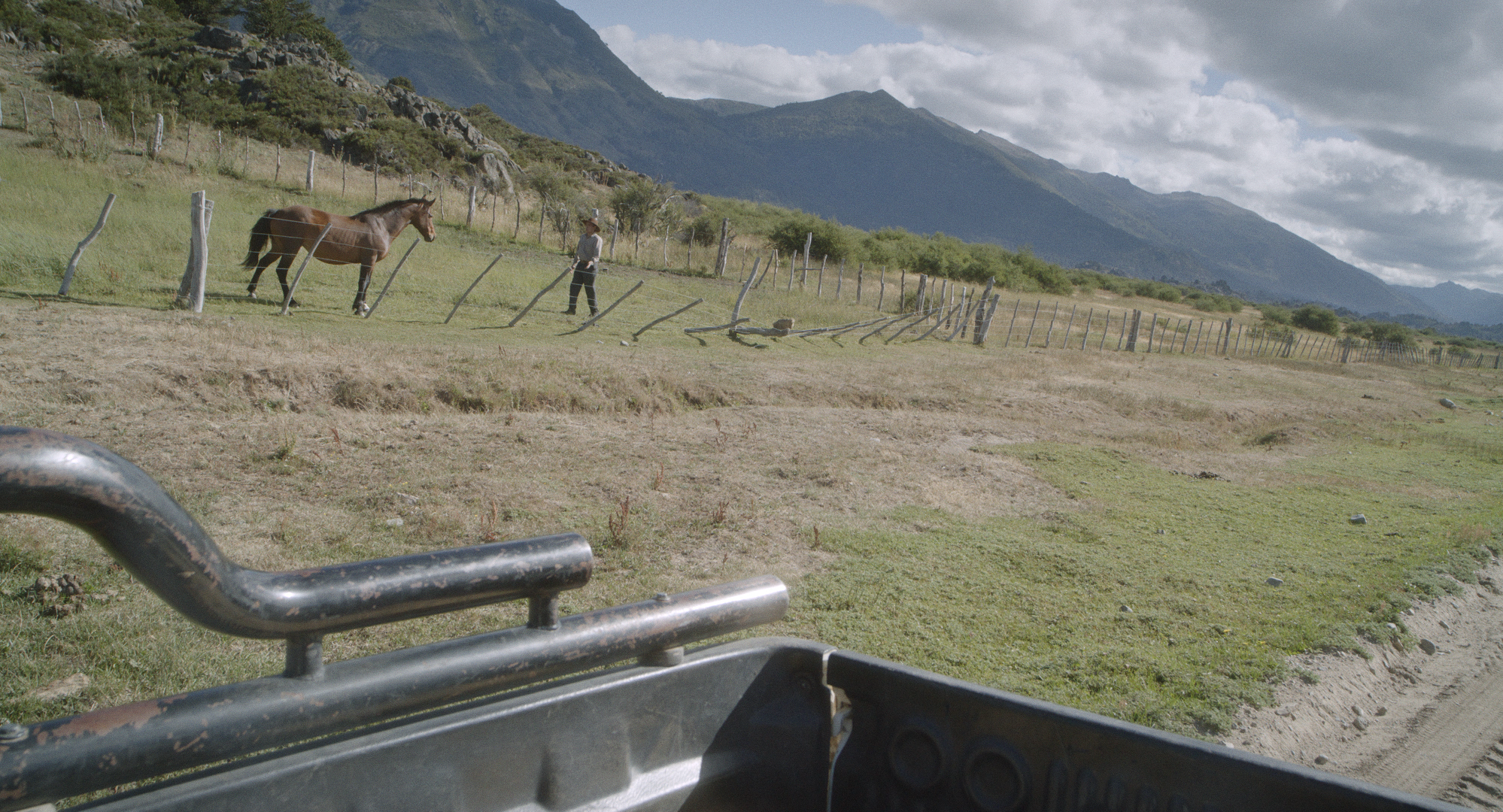
Fig. 4: Julián García Long and Dérives, still from the film From the mountain we see the mountain, 2025. Image by Julián García Long.
This is the film’s longest shot. We witness Nahuel and the horse as they attune to one another’s intentions. Gradually, it becomes clear that this is not an act of domination, but one of release. Later, they told us the horse had been locked up for several days and that they wanted to set it free. We were recording the reverse image of the cowboy, not the figure who dominates the horse, but one who liberates it.
In Mapuche history, the horse, introduced by the Spanish, became central to daily life and resistance against colonial forces, and can be seen as the most significant master’s tool turned against the master’s house. More than three centuries of Mapuche resistance alongside horses complicates a straightforward reading of Audre Lorde’s assertion that “the master’s tools will never dismantle the master’s house.”24
Nahuel and Diego saw an invitation in the landscape that I had missed. Zhong Mengual mobilizes Gibson’s concept of “affordances”, the idea that perception is shaped by interaction, to argue that our practices determine the invitations we see in the landscape. Affordances are not fixed attributes, but rather emerge through interaction and the information that the observer brings to their relationship with the landscape and its elements:
If certain animist peoples see the forest as a complex community teeming with life and worthy of interest, rather than as a two-dimensional aesthetic view attached to a pictorial reference, it is not because their cosmology establishes the forest as such a priori, but because they are involved in daily practices of exchange with it that reveal it as such to their perception. The same is true for scientists in laboratories, for birdwatchers in the countryside, and for each of us: our eye is relational, which means that what we perceive of the living world emerges from our practices in relation to it.25
Interpreted through this lens, Diego and Nahuel’s daily practices with that territory turned the restrained horse into an affordance, one that invites empathy toward the animal’s confinement rather than its human owner and their property rights imposed upon it.
Right after this unpremeditated scene, we filmed the recreated dialogue. While Emilia voiced my original questions, Diego spontaneously said that he never attends the ceremonies either, although he would like to. I wonder if that response contained a mixture of genuine interest and “strategic essentialism”, defined by the postcolonial theorist Gayatri Spivak as a strong identity performance used as a political tool for resistance and negotiation in a specific context.26 The awareness that they were being recorded might have compelled them to emphasize the Rewe and their traditions, projecting an indigenous identity they find politically useful. It is also possible that they were performing what they believed they ‘should be’, a fixed image of an identity that had long ago changed.27
In the montage of the film, the juxtaposition of the act of freeing the horse, a gesture full of care and ancestral presence, with a blunt admission of detachment from ceremonial practices, brings to the surface the contradiction between oblivion and resistance.
It was through the practice of filmmaking and the exercise of memory proposed by the scene that the story of the Rewe field emerged, latent in affordances in the landscape that needed to be decoded.
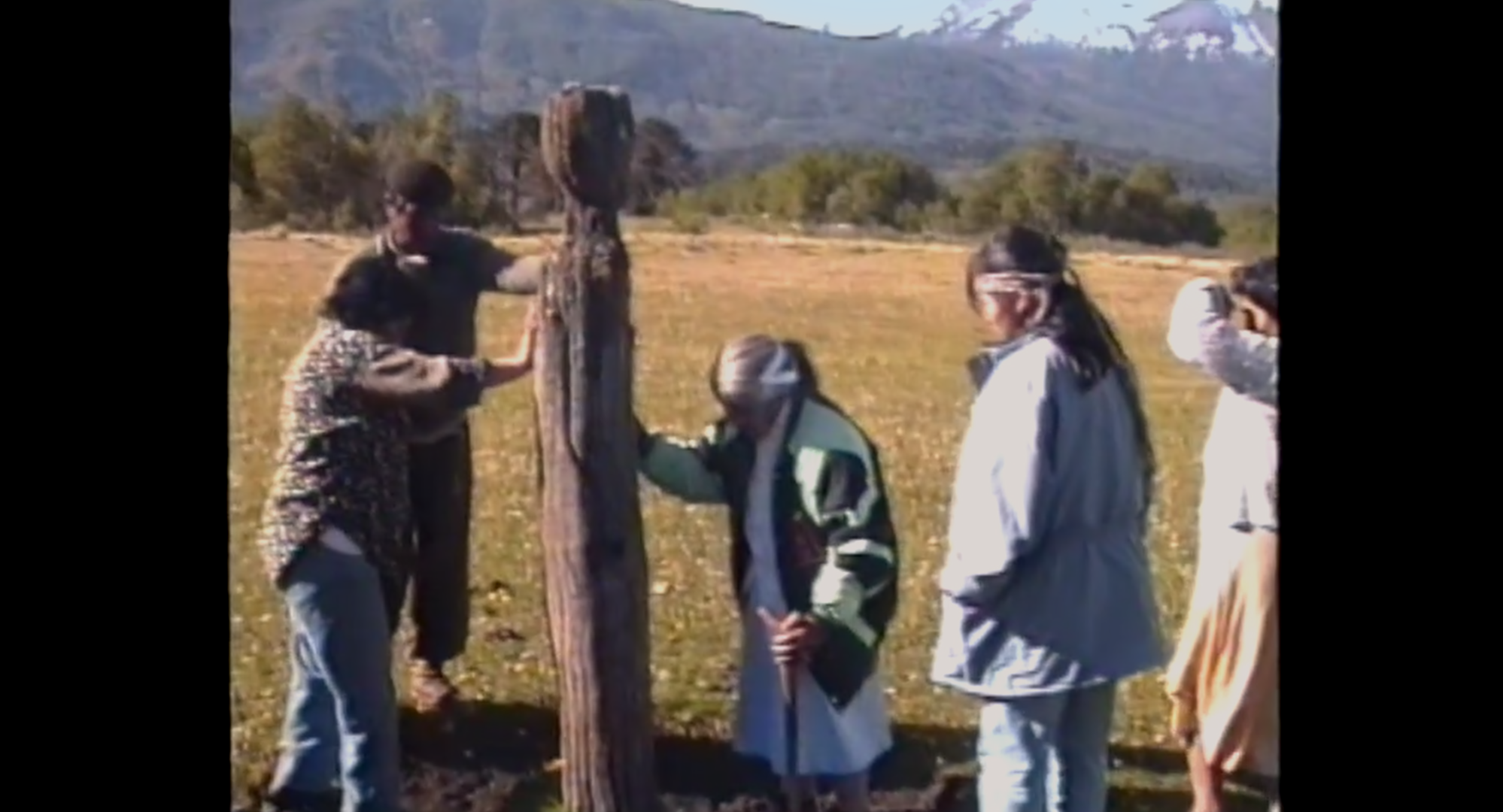
Fig. 5: Julián García Long and Dérives, still from the film From the mountain we see the mountain, 2025. Hi8 video recorded by Titi Ricciuto.
Some time after meeting Nahuel and learning about the Rewe, I came across a video on YouTube from 1995. A group of mostly Mapuche women returns to the Rewe field in Ñorquinco for the first time in sixty years, during the struggle held by six Mapuche communities that secured a 99-year concession over 42,000 hectares of ancestral lands.
The Ñorquinco community was evicted shortly after the creation of Lanín National Park in 1937, based on the argument that they were damaging a virginal landscape, once again using wilderness as justification for the dispossession of indigenous people. More than sixty years later, the presence of the Rewe was key to the legal recognition of the Ñorquinco community, as it proved its pre-existence to the founding of the National Park. After the community was rebuilt, many ancestral practices were lost or transformed to the point that the Lonko (leader) also serves as an evangelical pastor.
In the video, Rosa Catrileo and Sara Gil, born in that landscape prior to the eviction, approach the Rewe for the first time since their childhood. At that time, Aniceto Catrileo, Rosa’s father, was the Lonko. Unlike Nahuel and Diego, who recognize the importance of the Rewe but have no personal memories involving it, Rosa and Sara recall the ceremonies held, the beauty of the dances and the horsemen who rode around the Rewe.
In this archive, the Rewe once again acts as a powerful memory-object. Anthropologist Mónica Berón explains that such places are not static locations but living sites:
The Nguillatun fields, even those that are currently in disuse, are considered living memorials that serve as portals for shamans, ancestors, and deities to descend from the upper world to earth. They are considered integrating elements that connect the past, present, and future of the physical, spiritual, and social spheres.28
Tracing the source of the video, I contacted Titi Ricciuto, who had recorded it. He not only sent me the original Hi8 tapes, but also shared with me an article on the Rewe by Mónica Berón which contained a photograph (Fig. 6), perhaps the last image of a ceremony held at Ñorquinco before the eviction.
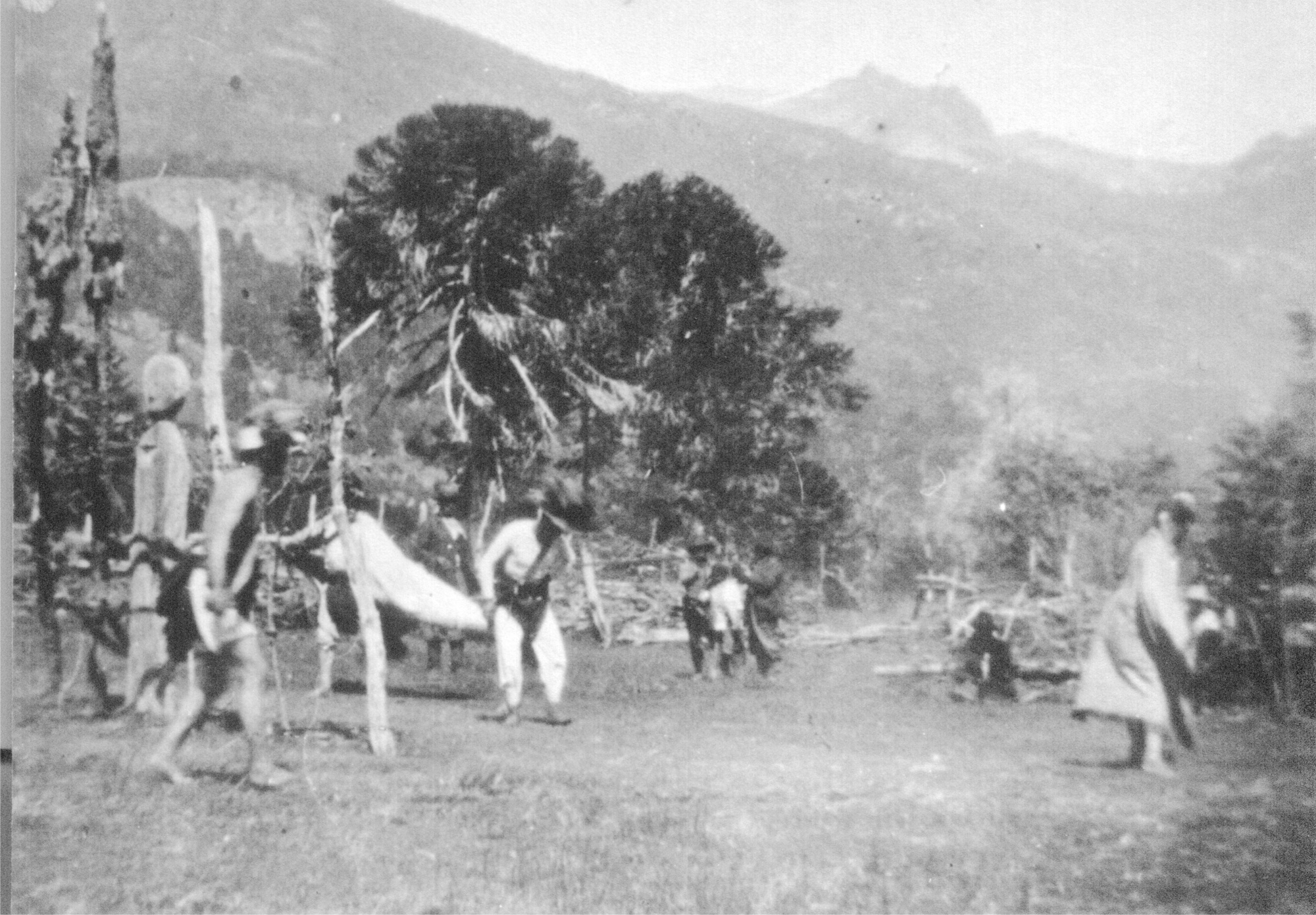
Fig. 6: L. Nowell Land, original given to R. Nardi and later passed on to M. Berón, 1934–35, digital scan. Photograph by L. Nowell Land.
Taken in 1934 or 1935 by the unknown photographer L. Nowell Land, it portrays the Choique Pürun, a dance imitating the movements of birds (Choiques), performed to the rhythm of the Kultrun, the traditional drum played by the person sitting on the right of the image. The Rewe, on the left side, is much taller than today. The passage of time, the presence of livestock, and rain have probably contributed to its deterioration. Such is the cycle of wooden cultural objects.
Unlike the postcards showing blue skies and pristine mountains that circulated in urban centres during the same period, neglecting the Mapuche presence that had survived the Conquest, this photograph does not rely on an elevated or distant vantage point.
Unlike the postcards showing blue skies and pristine mountains that circulated in urban centres during the same period, neglecting the Mapuche presence that had survived the Conquest, this photograph does not rely on an elevated or distant vantage point. It shows what lies before it: the Mapuche ritual taking place within the mountain, within the landscape as an inhabited space. The postcards and this photograph thus correspond to two distinct ways of relating to the territory, echoing Jean-Marc Besse’s assertion that “each landscape corresponds to a social and cultural way of settling on the surface of the earth and inhabiting it, that is, of transforming space, totally or partially, into a vast dwelling.”29
“For the full moon of April 1929, I was invited to the rogativa to be held at the foot of Cerro Mesa, in the valley of Limanco, a stream that flows down from Cerro Chachil, in the department of Aluminé.”30 This is how the chapter “Una Rogativa Pehuenche”31 starts in a little book I found at the museum “El Charrua” in Aluminé, the main town in the region where I filmed.
Written by Juan Benigar, a Croatian settler and one of the most prominent local historians, it recalls the last ceremony held near Ñorquinco, in a community that was also evicted by the Lanín National Park:
At a command from the leader, the drummer began to play, and we began to move, the men to the right and the women to the left.
A shiver ran down my spine. I had felt close to a dangerous secret and to a remote past, incalculable in the fractions of a second that are our years.
The tremendous ONE-EVERYTHING-NOTHING polarized into Male, Female, and the humanities of sunken Lemuria, who invented that human dynamo.
Yes, human dynamo: outside the crown of positive poles and inside the negative poles. It moves in opposite directions, approaching and withdrawing, producing very subtle currents of very powerful energies that have not yet entered the field of scientific research.
The Indians disperse these forces because they have retained only the memory of the external mechanism for producing them and have forgotten the spiritual practice necessary to concentrate and direct them.
Fascinated by this vision, I had hardly realised the end of the awün pürun when I heard the call of the leader of the rogativa: Awün mu, a pu wen! Awün mew!
One last awün and the last nguillatún ended at the Quilca Creek.
There was no formal divination. Only in plain conversation did doña Zoila comment on the misfortunes that would ensue from the eviction.
The people were getting ready for the departure, counting the bundles, saddling the horses, loading, when a ñanku, a white-breasted eagle, appeared from the southeast. It came straight towards us, but when it got close, it swerved and flew west, near the llagil, against the wind, to get lost behind the hill to the north.
Bad omen.
The people watched him with apprehension [sic]. There was some murmuring.
‘Kathü tu ru pay’ said someone. ‘He cut through’.
There was no more laughter. After brief farewells, the dispersion.32
This passage presents a worldview where the earth, humans, animals, and causal time are deeply intertwined. Once we learn that a ceremony was held there, that the suffering of eviction was predicted by the flight of an eagle, this knowledge transforms the way we see the place, as those layers of history overlap our gaze, bringing ancient practices to the surface. As Keith Basso explains, place-making is a combination of remembering and imagining: “We are, in a sense, the place-worlds we imagine.”33 Our perception shifts when memories attached to a landscape spark our imagination.
Just as practices change our perception, stories can also do so, as they can reveal to us previously hidden affordances. As Chérie N. Rivers notices, “there is a certain invincibility to stories. They are far from bulletproof, but stories have an uncanny power to reconfigure how we see (or do not see) ourselves in space and time.”34 Stories can either highlight the interrelation and nonhuman agency in a territory or reduce it to a mere backdrop for human action to unfold. The Mapuche counter-stories emphasizing reciprocity and interdependence have the potential to reshape our perception.
Learning my way in the mountains
This artistic research process created experiences and personal memories, and introduced me to the stories of the territory. As Besse writes, echoing Ingold, “To know is to transform oneself, to transform one’s way of being in the world, that is, of inhabiting it.”35 Asking about the origin of the fire, I encounter stories that deviated from my question, inscribed in the landscape. Over time, the stories I heard and my personal memories began to alter my relationship with these landscapes. The mountain became not a strategic vantage point to dominate the open space, but a place to see and hear what it holds within.
The site-specific nature of the project was key to bringing culture and territory closer together. By focusing on a constrained space and intersecting various disciplines, the landscape revealed itself as rich and multifaceted, filled with historical layers, human and non-human relationships, and diverse ways of inhabiting.
Filming involved not only an attentive look through the lens but also a deep engagement over time. While returning to the same locations across seasons, I had to attune my senses to the changes, sometimes radical and others subtle, as each time I had to find the paths (or affordances) in the mountains again.
This project not only affected my perception of the territory where it took place but also my understanding of the surrounding Patagonian landscape. If so many stories and presences emerged from the place where I filmed, how much richness must there be in those spaces that I grew up understanding as empty?
My work joins that of others who are building in the cracks of dominant discourses that impose a single way of seeing and inhabiting the world. I would not pretend to have created a film that deconstructs the colonial image of Patagonia; such an aspiration would deny the influence of those imaginaries on my own perception. Rather, working on the project transformed my relationship with the territory. Much of this process lies beyond the scope of the finished film itself, and it is this broader process that I have explored in this article. Hopefully, this record of my journey may encourage others to reflect on their own relationships to places and on the influence of the colonial gaze we carry within us. As Mignolo and Walsh argue, building on Lorde’s powerful words, rather than dismantling the master’s house, it is about building many others from singular narratives and experiences:
Transcending rather than dismantling Western ideas through building our own houses of thought. When enough houses are built, the hegemony of the master’s house – in fact, mastery itself – will cease to maintain its imperial status. Shelter needn’t be the rooms offered by such domination.36
I initiated what I now understand as a work-in-progress transformation and re-examination of my gaze. This inherently contradictory process has already deeply influenced my life and the projects I am involved in. Amid all that I have learned about my homeland, much of it remains an enigma; it is perhaps the glimpses I saw through such opacity that now draws me toward it with fascination.
Acknowledgements
I would like to thank the peer reviewers Laurens Dhaenens, Lize Kerrels, and Peter Krüger, as well as the editor, Elisa Seghers. Their feedback led me to re-evaluate the text, making my perspective more nuanced and intertwined between theory and practice. I especially want to thank Laurens for his dedicated feedback, which greatly enhanced my writing during this early stage of learning to write articles. I would also like to take this opportunity to thank my supervisors, Leen Engelen and Liesbeth Decan, as well as the members of my doctoral committee: Beny Wagner, Sasha Litvintseva and Teresa Castro. Our in-depth discussions always have a lasting effect, challenging the foundations of my artistic research and deepening my reflection.
I want to express my gratitude to the generosity of the diverse Patagonian land and to all the people and beings I encountered, especially those fighting against far-right policies aimed at erasing every form of dignified life that resists capitalist standardization.
Finally, as I submit this last version on 24 Mar. 2026, marking fifty years since the bloody military coup in Argentina, echoes of protests from every street in my country reach Brussels: 30,000 detenidos-desaparecidos ¡presentes! ¡ahora y siempre!
+++
Julián García Long
Born in Patagonia, Julián García Long is a filmmaker and researcher based in Belgium. He studied at Le Fresnoy in France and is a PhD candidate at LUCA School of Arts in Belgium, exploring decolonial approaches to landscape representation.
Noten
- Pizarnik, Alejandra. Diarios. Penguin Random House Grupo Editorial, 2024, pp. 57–58. All translations from Spanish and French to English are by the author, unless indicated otherwise. ↩
- Benigar, Juan. Rogativas Araucanas, edited by Maria Victoria Meazza, La Biblio, 2022 ↩
- Smith, Neil. Uneven Development. University of Georgia Press, 1990, jstor.org/stable/j.ctt46nmvk. Accessed 1 Aug. 2026. ↩
- Gibson, James J. The Ecological Approach to Visual Perception: Classic Edition. 1st ed., Psychology Press, 2014. ↩
- Basso, Keith. Wisdom Sits in Places, Landscape and Language Among the Western Apache. University of New Mexico Press, 1996, p. 143. ↩
- Mailhe, Alejandra. En busca de la alteridad perdida: Indigenismos y mestizajes en Argentina y América Latina entre fines del siglo XIX y la década de 1960. Bernal, Universidad Nacional de Quilmes, 2023. ↩
- Castro, Teresa. “Contre le paysage. Cinéma, anthropologie de la nature et raison écologique.” La Furia Umana, vol. 39, 2020. ↩
- Mitchell, W. J. T. Landscape and Power. 2nd ed., University of Chicago Press, 2002. ↩
- Cronon, William, editor. Uncommon Ground: Rethinking the Human Place in Nature. W. W. Norton & Co., 1995, pp. 69–90. ↩
- Yujnovsky, Inés. Viajeros a la sombra de Darwin. Fotografías de la Patagonia a fines del siglo XIX. Colección Pretéritos Imperfectos, ArtexArte, 2021. ↩
- Penhos, Marta. “Las fotografías del álbum de Encina, Moreno y Cía. (1883).” Huellas. Búsquedas en Artes y Diseño, no. 9, 2016, pp. 65-80. ↩
- Yujnovsky. ↩
- Masotta, Carlos. Paisajes en las primeras postales fotográficas. Landscapes in the early 1900s. Argentine photo postcards. La Marca Editora, 2007, p. 113. ↩
- Berque, Agustin. La pensée paysagère. Aux éditions éoliennes, 2016. ↩
- Besse, Jean-Marc. La nécessité du paysage. Parenthèses, 2018. ↩
- Plumwood, Val. “The Concept of a Cultural Landscape: Nature, Culture and Agency in the Land.” Ethics and the Environment, vol. 11, no. 2, 2006, pp. 115-50, doi.org/10.2979/ETE.2006.11.2.115. Accessed 1 Aug. 2026. ↩
- Zhong Mengual, Estelle. Apprendre à voir: Le point de vue du vivant.. Actes Sud, 2021. ↩
- Basso. ↩
- Rivers, Chérie N. To Be Nsala’s Daughter: Decomposing the Colonial Gaze. 1st ed., Duke University Press, 2023, doi.org/10.1515/9781478023722. Accessed 1 Aug. 2026. ↩
- Bengoa, Jose. Historia de los Antiguos Mapuches del Sur. Editorial Catalonia, 2007, p. 186. ↩
- Perearnau, Marcos. Arterritorio: estética del relieve. Libretto, 2025, p. 11. ↩
- Mailhe, pp. 11-12. ↩
- Puelmapu in the Mapudungun language refers to the part of the Wallmapu – the Mapuche ancestral territory – which lies to the east of the Andes mountain range, nowadays called Argentina. ↩
- Lorde, Audre. The Master’s Tools Will Never Dismantle the Master’s House. Penguin Books, 2018, p. 16. ↩
- Zhong Mengual, p. 14. ↩
- Spivak, Gayatri Chakravorty, and Ellen Rooney. “En Una Palabra. Entrevista. Gayatri Chakravorty Spivak Con Ellen Rooney”. Revista De Estudios Sociales, translated by Soledad Tuñón, no. 88, Apr. 2024, pp. 101–28, doi.org/10.7440/res88.2024.06. Accessed 1 Aug. 2026. ↩
- I am currently exploring this topic in more depth for an article entitled “Negotiations of Representation”, due to be published in October 2026 in VIS Issue 16. ↩
- Berón, Mónica. “El rehue de Ñorquinco, un diacrítico de interacción social y cultural trasandino.” El Lof Ñorquinco y la historia de sus pobladores: de la Expulsión a la reconstrucción, edited by Sebastián Valverde and others, Editorial de la Facultad de Filosofía y Letras, 2011, p. 9. ↩
- Besse, p. 16. ↩
- Benigar, p. 62. ↩
- Pehuenches are the Mapuches from the region of the Andes where the Pehuen (or Pewen) tree grows. ↩
- Benigar, pp. 80-81. ↩
- Basso, p. 7. ↩
- Rivers, p. 31. ↩
- Besse, p. 66. ↩
- Mignolo, Walter, and Catherine E. Walsh. On Decoloniality: Concepts, Analytics, Praxis. Duke University Press, 2018, p. 8. ↩
Meer in dit thema
(Dis)placed interventions. Tussen gedeelde en publieke ruimte
Elly Van Eeghem
De academie als mythisch landschap
Yorgos Maraziotis
Meer uit dit nummer
Collective Signal: A swan song for the air raid siren
Angela de Weijer, Karin Bijsterveld